![[REDACTED]](https://redactedblog.com/wp-content/uploads/2025/06/gradient-circle-text-sanitize-facebook-post-3-modified-1.png)
When I started hoarding cassettes, it was 2017, putting me about 60 years behind the parade. At the time, I was an undergraduate English major, working on a (horrible) book in which one of the characters, for no clear reason, listened almost exclusively to cassettes. In some literary variation of method acting, I realized I hadn’t heard a cassette in action, and decided it was necessary to capture the sound on the page. The manuscript never came to fruition (thank god), but after securing my first tape—a scratchy, static-drenched compilation mix called The CALIFORNIA Sound of the 60s—I was sold. For the next year, anywhere I went, my $15 Sony cassette player, a pair of cheap headphones, and a handful of cassettes went with me.
Pretty quickly, people gave me a hard time, and sure. Lots of folks around me (mostly my professors) were around for the peak cassette era and knew the medium well, recognizing tapes for the creature they are: cheap, flimsy, and prone to deterioration. They could all recall stories of their Walkmans slipping from their belts and shattering, or a faulty deck eating the intestines of a prized album. However, my new pursuit was mainly met with confusion: why would I want to listen to low-quality music on a bulky device when I could stream clear audio without all the props?
But it is the grit and impurities of the cassettes that lit the initial fire of obsession. Cassettes are a tactile experience, more than any other delivery format outside of live shows—they’re grainy and popping and whizzing and full of fireworks, and you’re shoved in the barrel of the instruments, and you’re an inch from every voice, and when you hear that familiar click and go to flip the tape, you’re in the action. The lack of refinement puts you right in the room with the artist, capturing every breath, every hesitation. And when I’m holding a cassette, I am within the community of all those who possessed it before me. My favorite part of any tape is the warp and grain on one or two tracks, because it tells me what songs the previous owner gravitated towards, what they were going through while they were listening: heartbreak, depression, transition.
Besides, what we recognize as independent music wouldn’t exist without these cheap little tapes. I won’t pretend to have the full history under my belt (highly recommend High Bias: The Distorted History of the Cassette Tape by Marc Masters), but for a woefully bare-boned explanation, early cassettes allowed artists to record independently and take control of their sound outside of a studio setting, enraging producers and thrilling fans. If cassettes were responsible for so much of the music that kept me rolling forward, how could I see them as anything but remarkable?
Back to 2017: I was clueless, but hungry, a stellar combination for a collector. Cassettes went for twenty-five cents a pop at the Half Price Bookstore locations scattered around my university, and I spent hours each week rotating between locations, sitting on the floor between their narrow wooden aisles with piles of tapes around me, and—as strangers leaned over my roadblocks to reach the vinyl—I sorted my options. I snatched up Johnny Cash in San Antonio, Billie Holiday in Houston, Stevie Nicks in Austin. Alongside releases from better-known artists, I eagerly branched towards those I’d never heard of, tapes with bizarre hand-drawn covers and scrambled mixtape titles like HOT HOT and BEST NEW SHIT. I collected 60s-80s pop groups, “best of the era” mixes, doo-wop compilations, Irish rebel songs, instrumental concerts performed in Central Park, operas, Broadway soundtracks, movie scores, audiobook readings (Meryl Streep on Velveteen Rabbit is a personal favorite), bands so underground you’d need a shovel to dig them up, and demo reels that nearly landed in the recycling bin. All this, and lots and lots of rock.
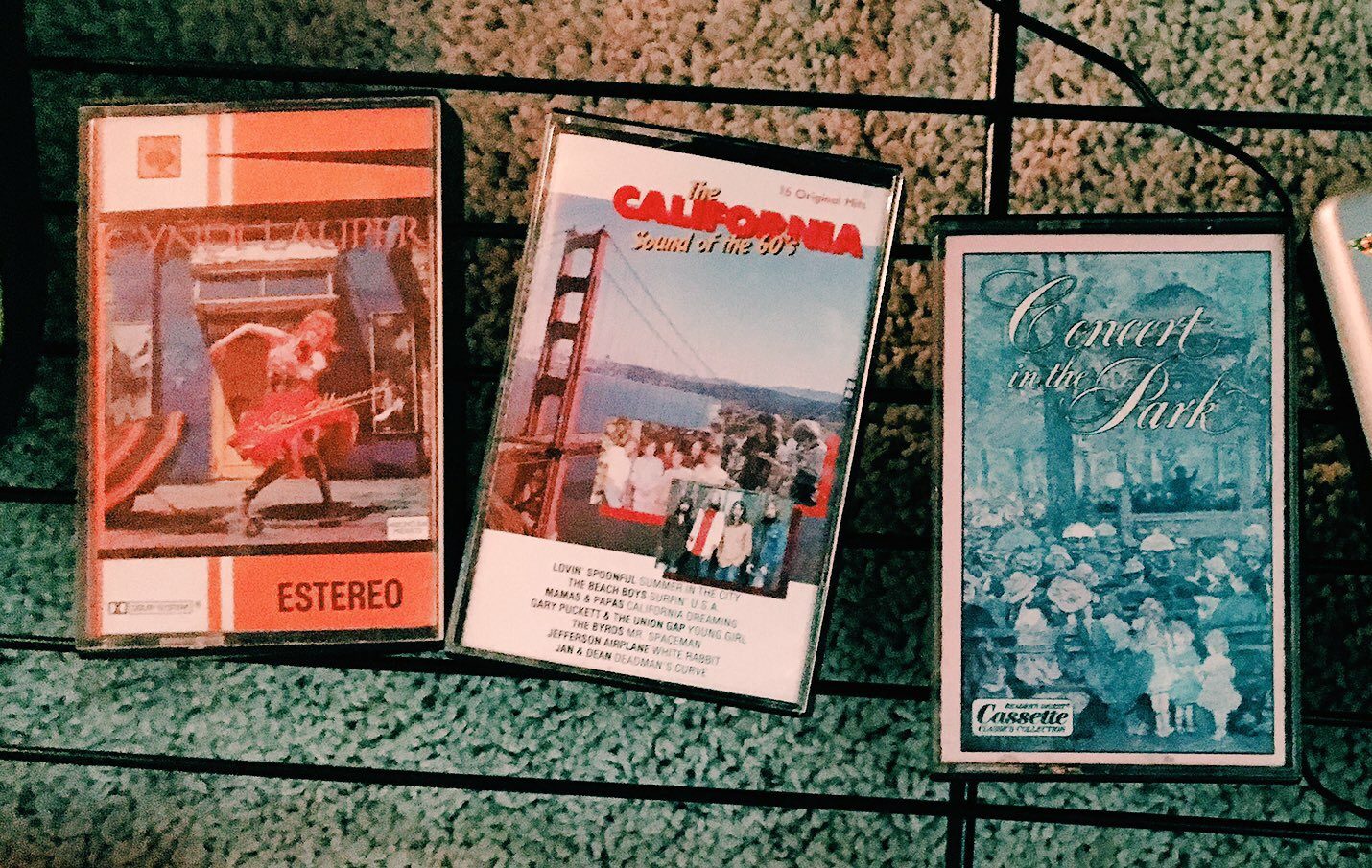
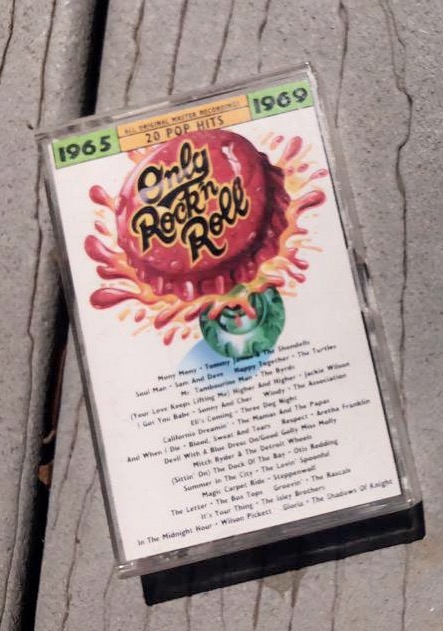

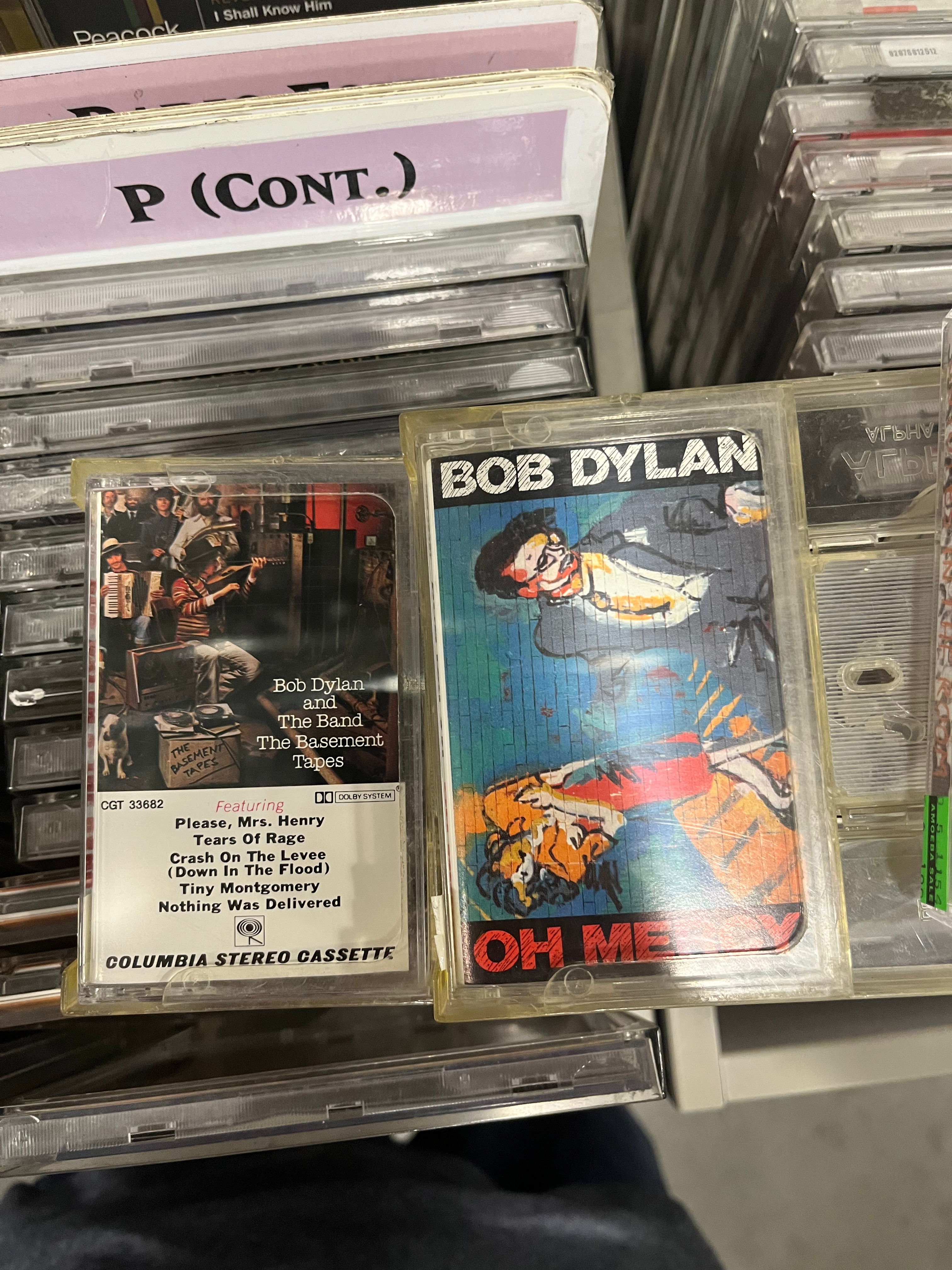
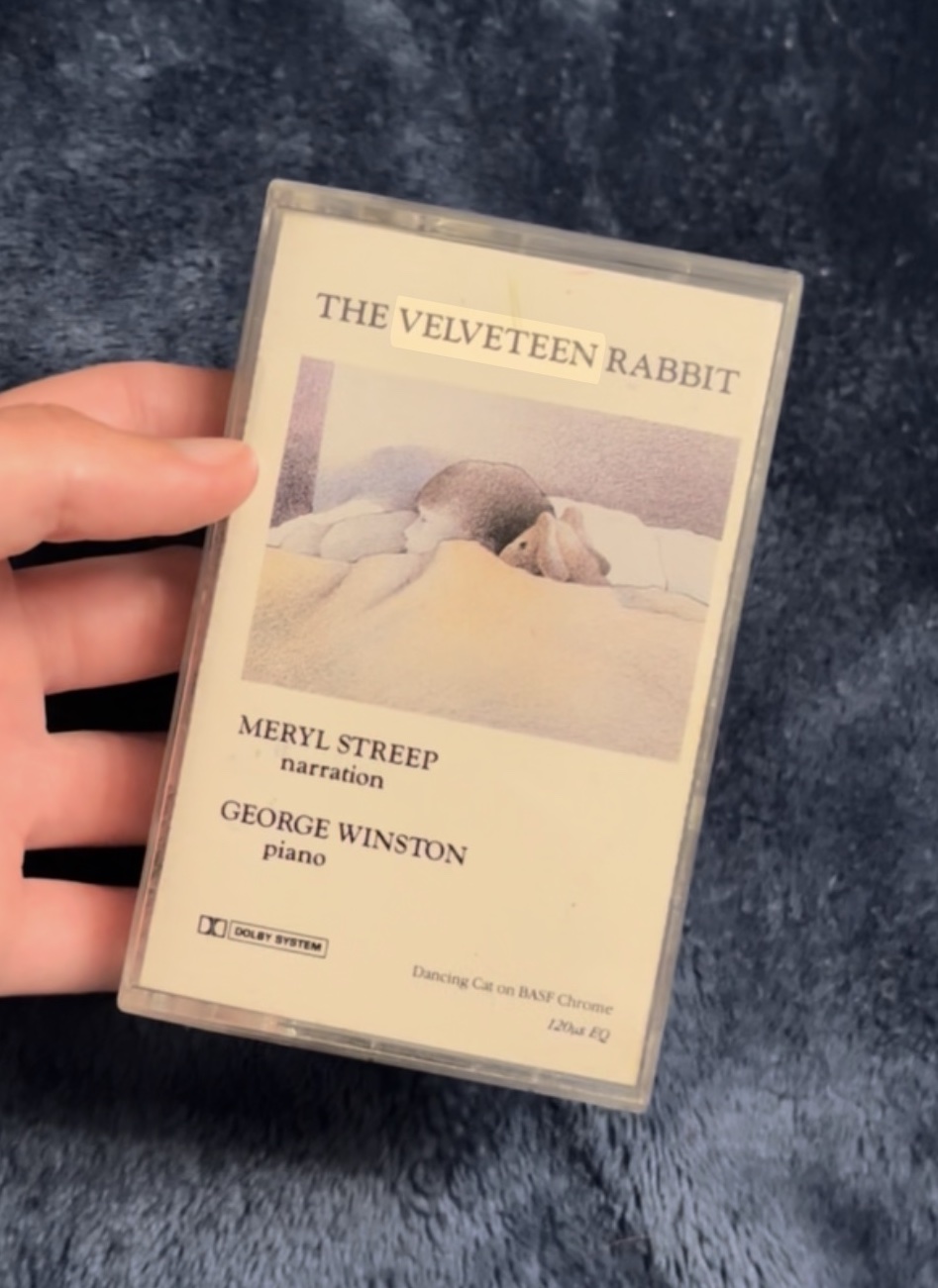
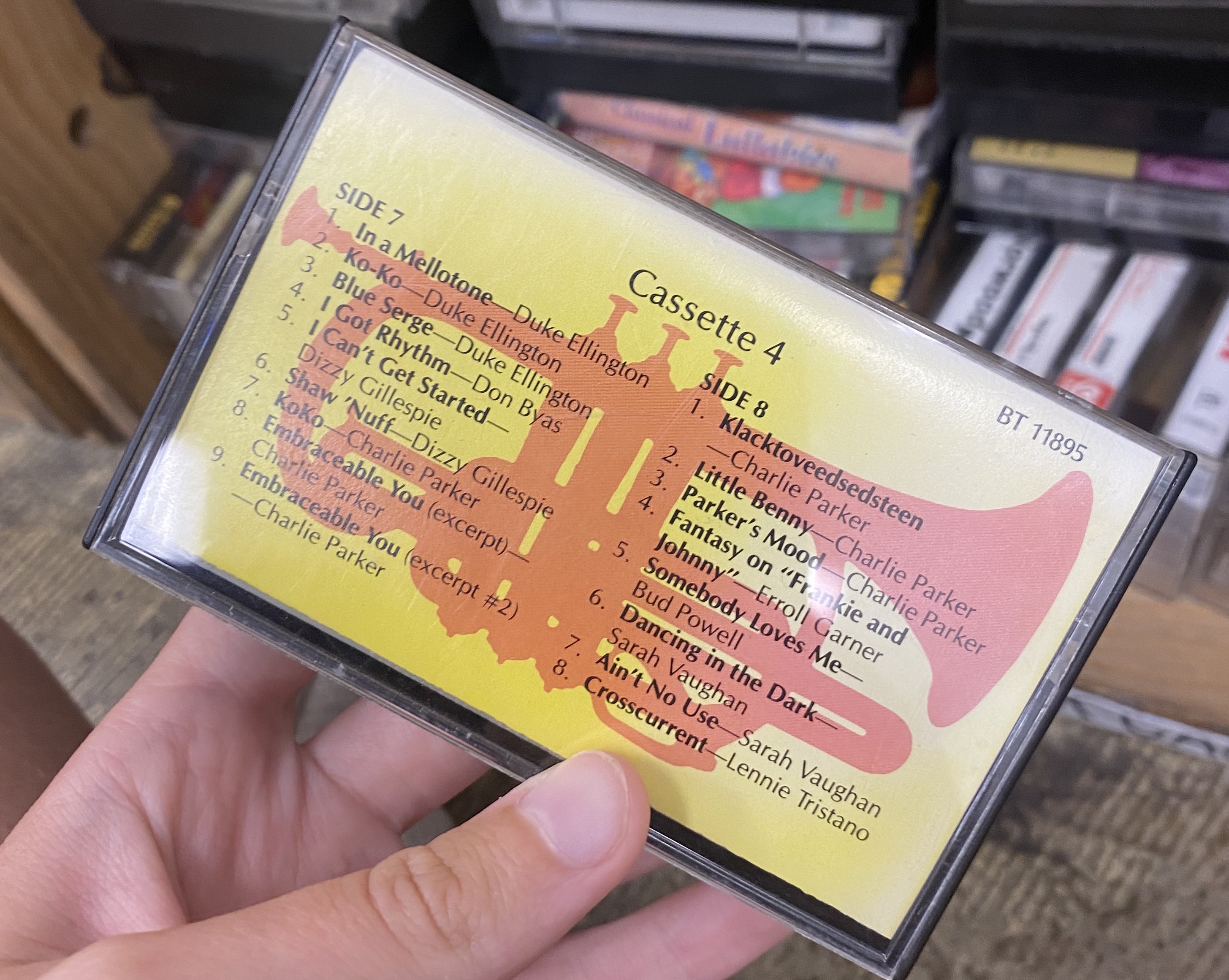
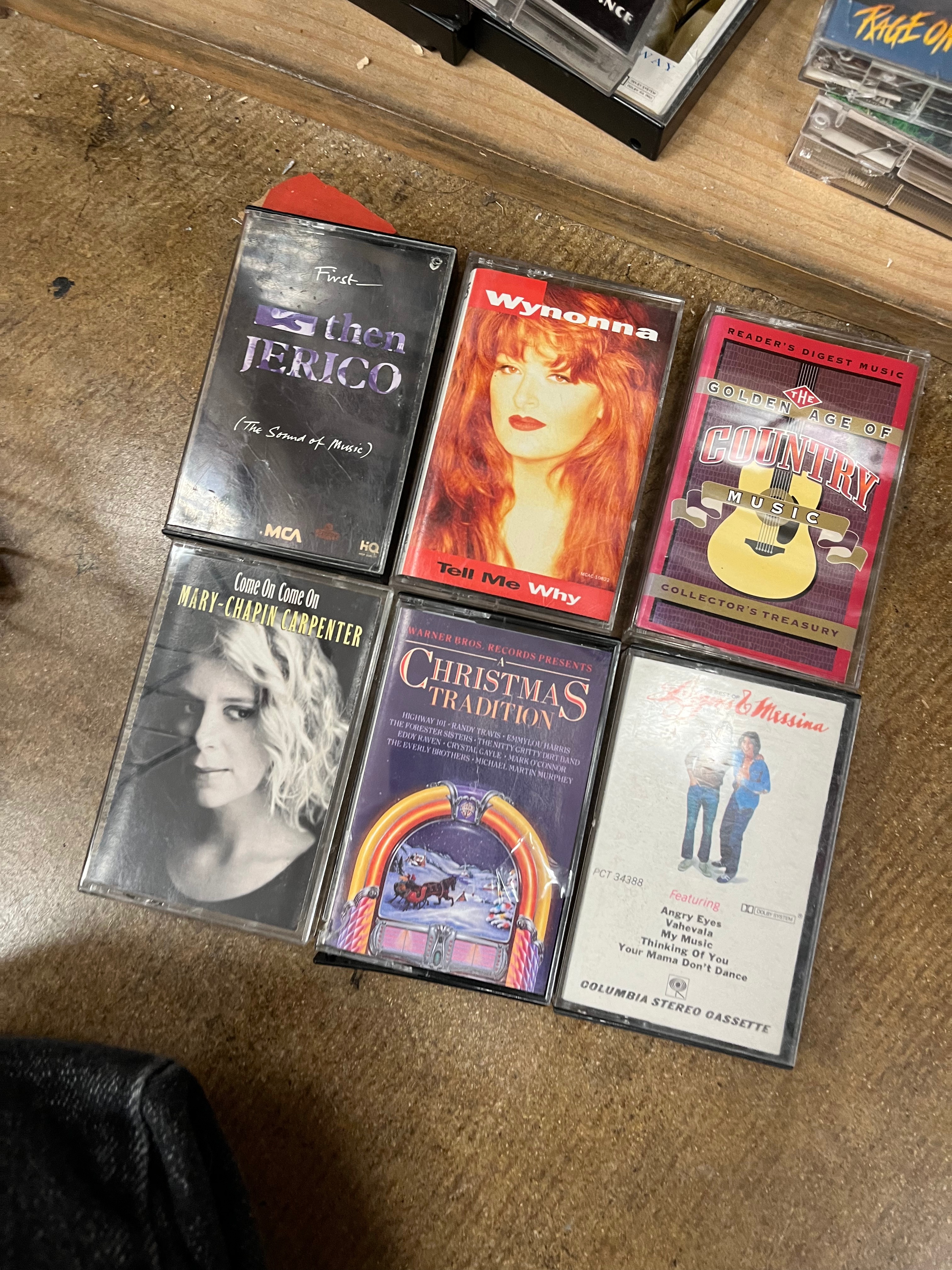
Then came two big shifts: 1) I moved across the country to California, away from all the Half Price Books locations, which I’d nearly cleared out by that point anyway, and 2) cassette prices started to jump, partially in correlation with their appearance on Stranger Things paired with Kate Bush’s sensational “Running Up That Hill” (which I also snagged on cassette right before the surge of the Hounds of Love re-popularity—thanks, Discogs, you angels). Now, tapes were jumping from $1 to $5, from $5 to $10. Ordering cassettes online can be a gamble—the sound quality can range from stellar to indiscernible on a used tape. I could gamble with twenty-five cents, but to blow $10 on a cassette that could be unsalvageable wasn’t worth the leap.
By 2022, I had over 200 cassettes. I didn’t need more. But much like every other fixation that I should’ve pulled the brakes on (including instruments, of which I own three guitars, two harmonicas, two hammered dulcimers, a portable grand piano, a kalimba, and a theremin, all shoved into my 250-sq.-foot studio apartment), I had no plans of slowing down. So I turned to Craigslist and simply searched “cassettes,” hoping to find a cheap lot that could hold me over until prices dropped again. The first listing read: Free Huge Collection of Classic Rock Cassettes!
In the post (featuring impressive floor-to-ceiling shelves stacked with tapes), a lovely man named Larry expressed the desire for his lifelong collection of cassettes to go to a good home. He and his wife were downsizing, and that meant condensing his massive library down to a single crate and purging the rest. Larry was hopeful that whoever got the cassettes would be someone who would treasure them rather than resell them. I didn’t know how to tell him that not only would I never resell the tapes, I would have to be run over (twice for good measure) if anyone wanted to try to take them from me. Instead, I said something regular and appropriate about how I’d be delighted to take them off his hands, and that I’d drive anywhere within the state to make it happen.
When he got back to me, someone else had already come by for a chunk of the collection, though he sounded remorseful. Larry replied, I wish I had heard from you earlier…I was hoping to get them to someone who would really appreciate them, and it sounds like you. Still, he had a couple of crates left, and he promised to hold them for me. He was even kind enough to ask my favorite bands and offered to look through his own remaining tapes to see if he had anything he was willing to part with (thanks for throwing in The Doors, my friend).
A few days later, my roommate and I embarked on a journey to Ventura, a four-hour round-trip from Anaheim, to pick up the bounty. When we arrived, Larry stood in his driveway with a shirt that read MUSIC. Of the uniform, he said, “I wanted to make sure you knew it was me.”
Although he was kind, he seemed wary, perhaps because he hadn’t expected the person who emailed the sentence I never go anywhere without my Sony player and at least 8 cassettes to be a twenty-two-year-old kid with shaky kid hands and an awful kid haircut, though he seemed reassured by my enthusiasm.
“Another kid came to pick up most of the collection. Some young guy,” he said. “He didn’t seem all that excited. Kinda bored with what I had. I think he’s probably going to sell them.”
“I would never,” I replied. “I promise. I’m keeping these forever.”
He smiled, then retreated into his garage to grab “the last of it.” What Larry produced was two massive boxes filled to the brim with tapes. My arms shook as my roommate and I carried them back to my car, trying not to get too excited before the long drive back. I packed them in safely, shook Larry’s hand, and promised to take care of the cassettes for good—no selling and no passing of hands, unless it meant giving away a tape to someone else with a shared appreciation.
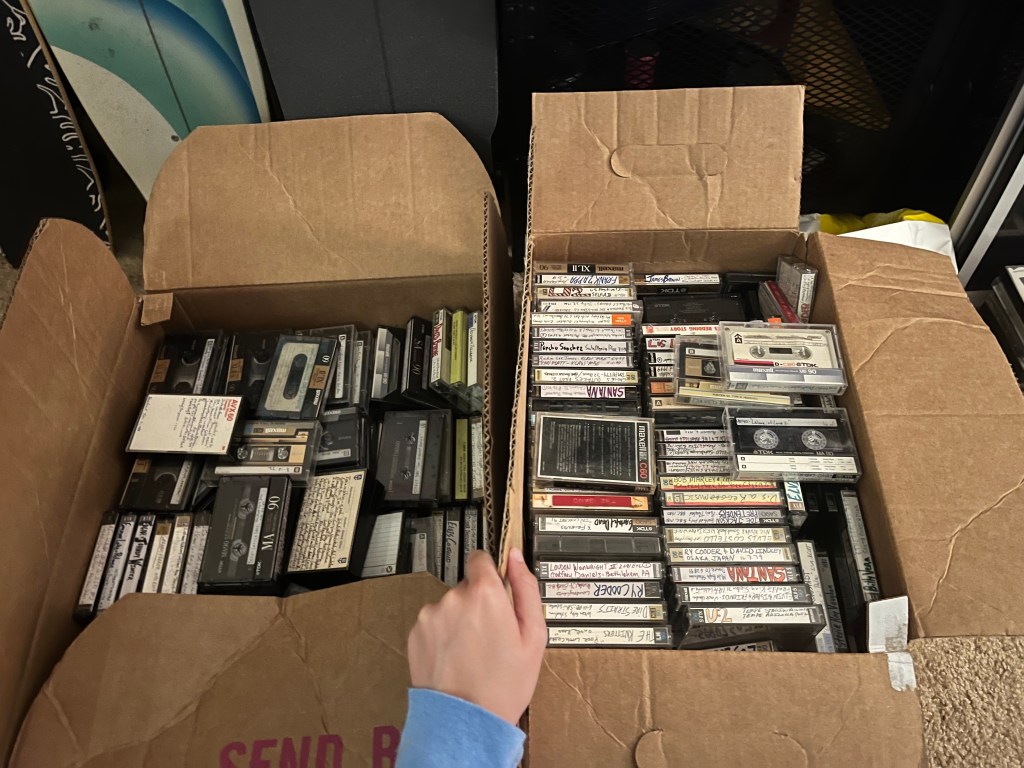
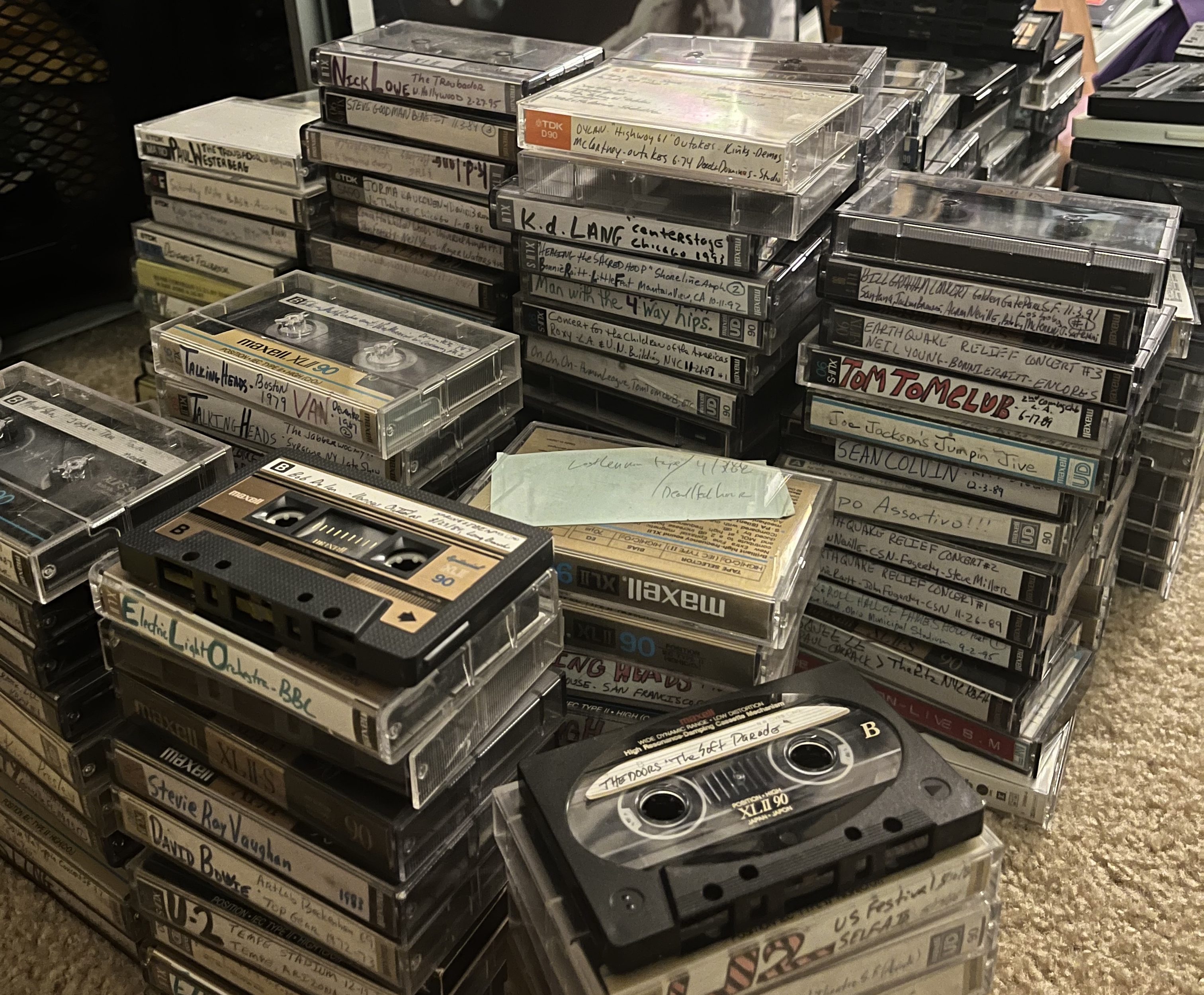
When I got back to my apartment and lugged the boxes inside, I thanked my roommate, shut my bedroom door, and didn’t emerge for hours. As I reviewed and hand-cleaned each cassette case, I was stunned not just by the amount of tapes, but by their individuality. The collection consisted almost entirely of live concert recordings: Talking Heads at the Long Beach Arena, 1983; David Bowie & The Spiders from Mars at Earl’s Court London, 1973; The Clash in San Francisco in 1982; Elton John at Hammersmith Odeon in 1973. Alongside the live shows, Larry also threw in tapes he’d collected from friends within the music industry who passed him different demos and recordings across the years.
Unlike me, Larry hadn’t ransacked a used bookstore for these tapes. He’d taken these recordings from concert halls and stereos, capturing the performances (in their grit and glory) as they unfolded. Not mass-produced—these were unique artifacts, a piece of music history that he had been present for at every step. As I read the hand-written labels on each of the spines—detailing concerts, performances, and rehearsals stretching all the way back to the 60s—I was overcome. How special to imagine Larry capturing these, and how unbelievable it was to imagine letting them go. I was grateful for his trust, and, more than ever, I felt desperate to keep them safe. I had no idea how much use they’d gotten across the years, and I was terrified to play almost any of them at the risk of damage.
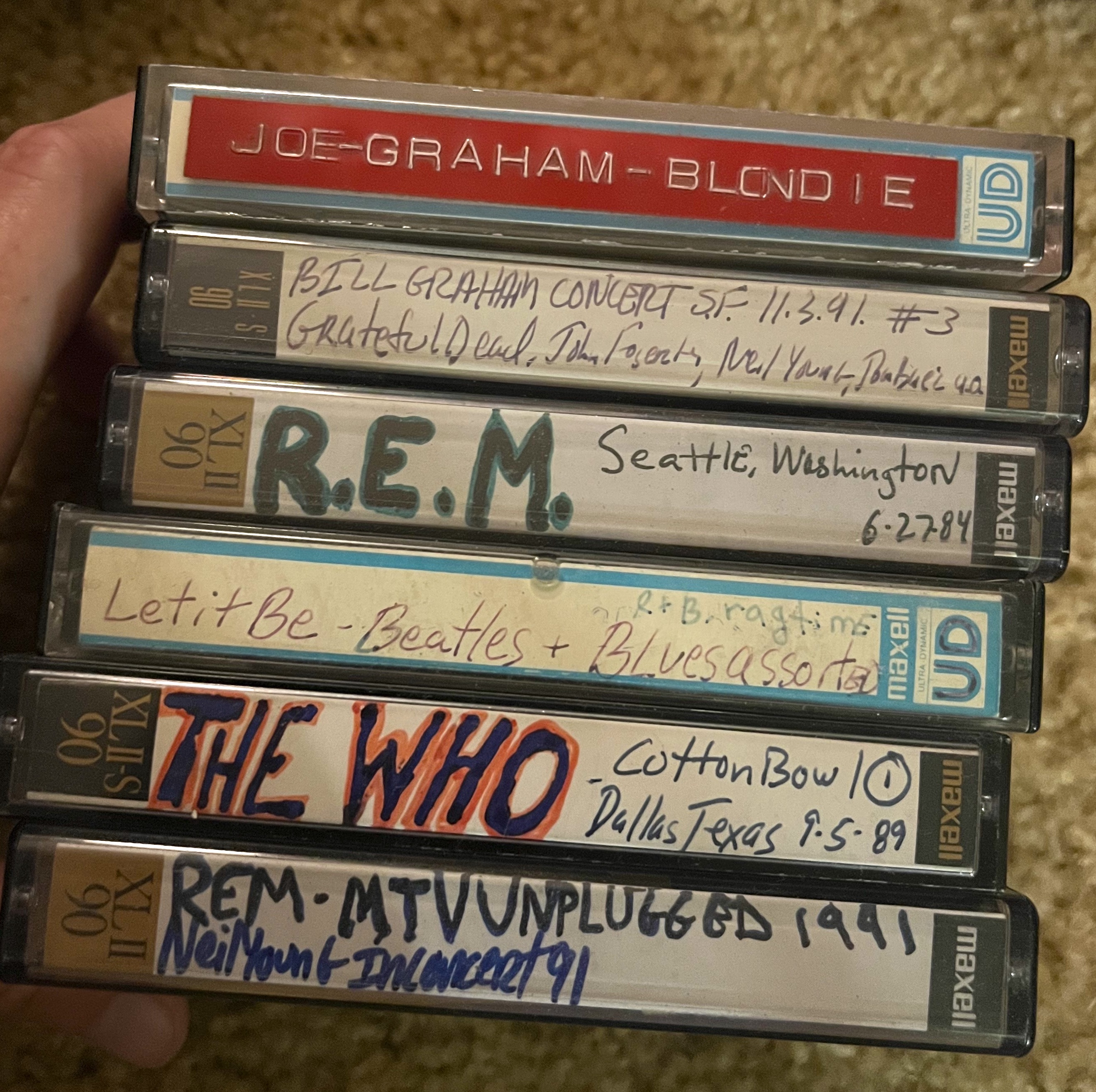
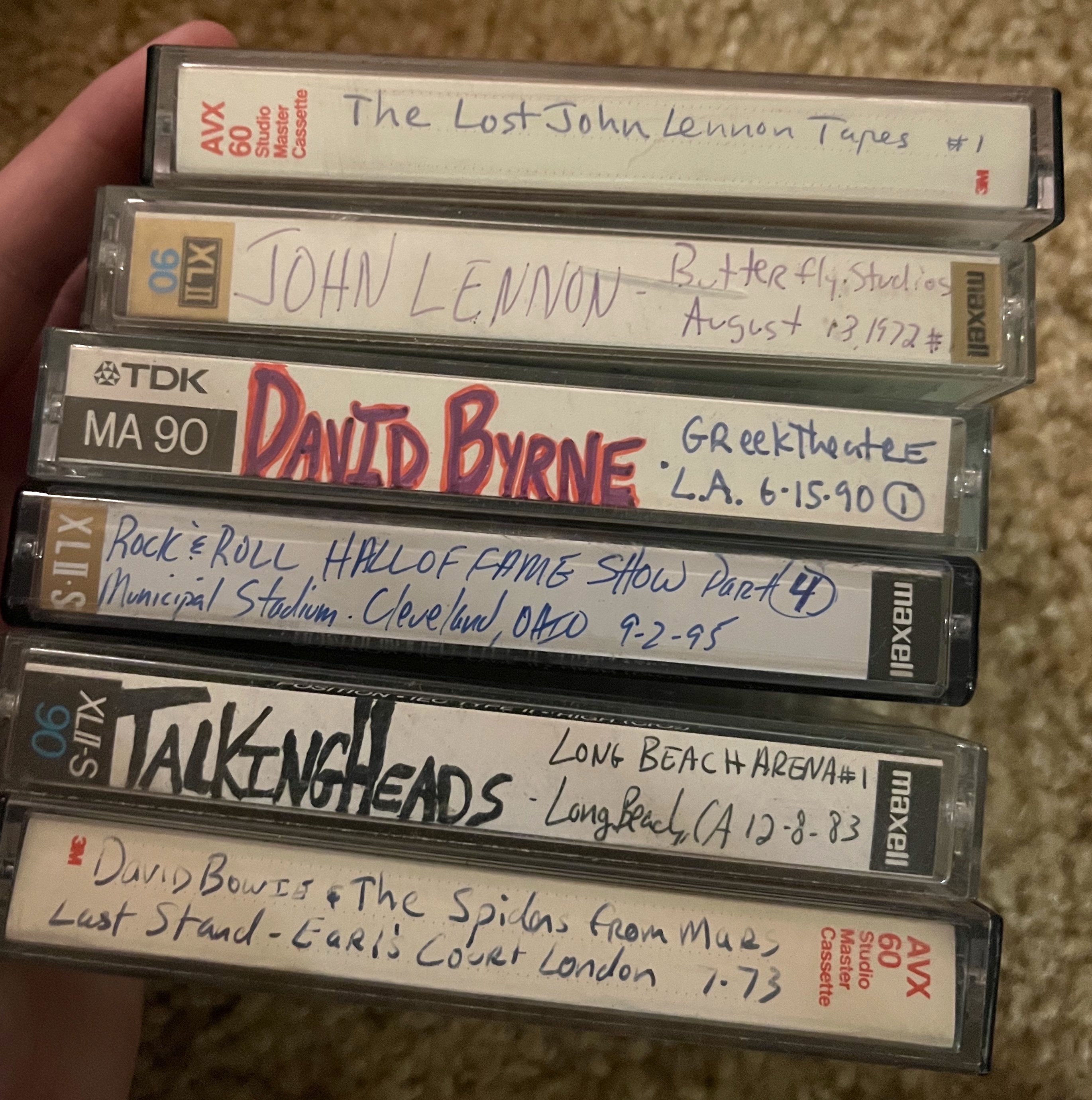
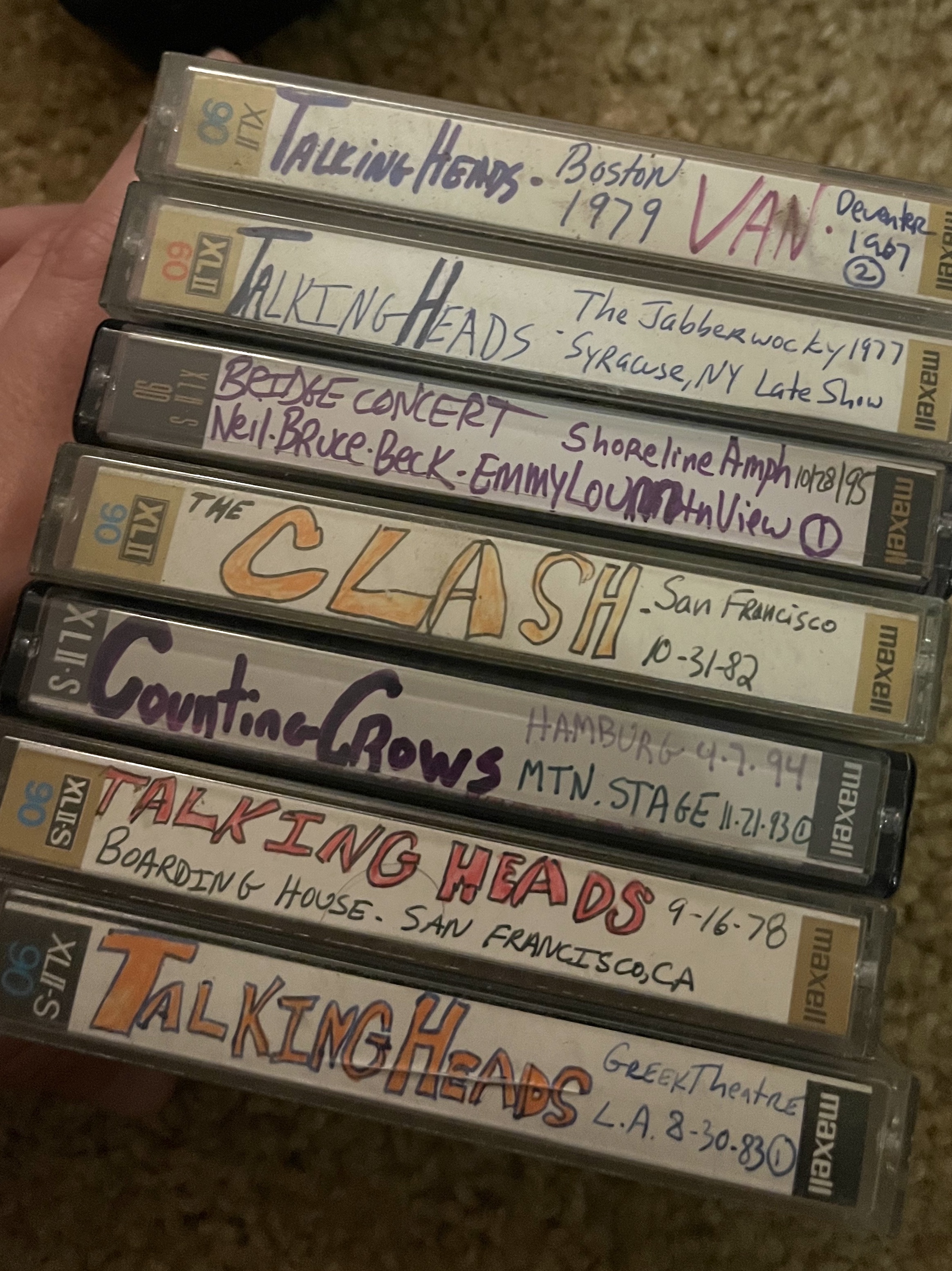
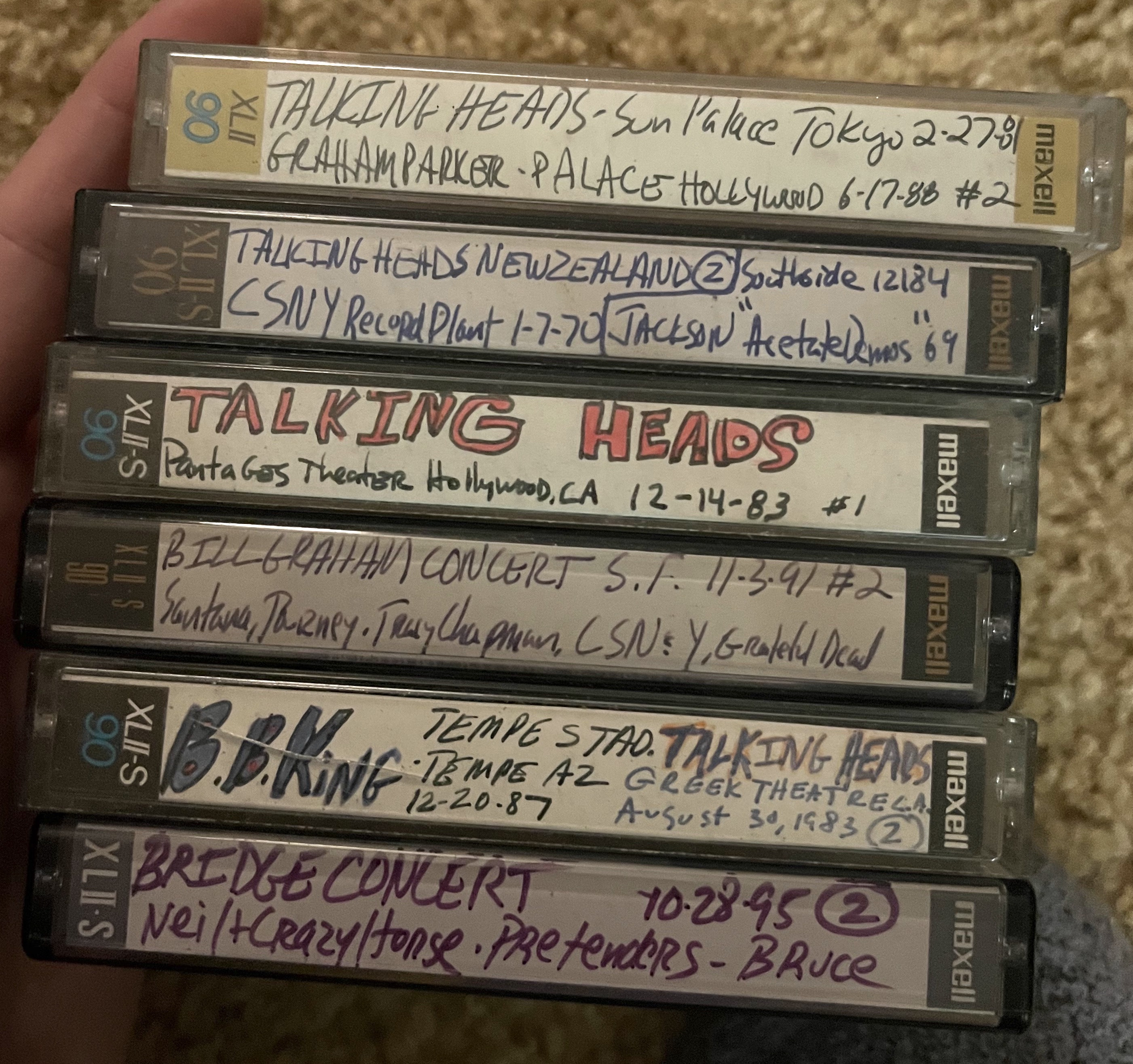
But about a year after receiving Larry’s enormous collection, they finally made USB digitizers cheap enough for a kid like me to grab one, so I did. A digitizer would allow me to transfer the audio of the tapes onto a virtual studio on my laptop, where I could not only preserve the performances, but also clean up the static, repair/remove silences, and clarify the sound (not that I knew how, but boy, was I gunning to learn). To my disappointment, the first digitizer I got didn’t function as anything other than a cassette player, but the next one, acquired six months later, seemed more promising.
To digitize a tape, I would have to play the full recording through on both sides, capturing the sound in real time on my computer. After briefly testing a cassette that I was willing to sacrifice if the machine self-destructed, and all seemed clear, I popped in David Bowie’s Earl’s Court performance and crossed my fingers.
I clicked PLAY on the cassette player, RECORD on my laptop. When I saw the sound wave appear, I was relieved; when I heard the audience start to rumble through my speakers, I knew I was entering into something rare, something special.
I started with David Bowie:
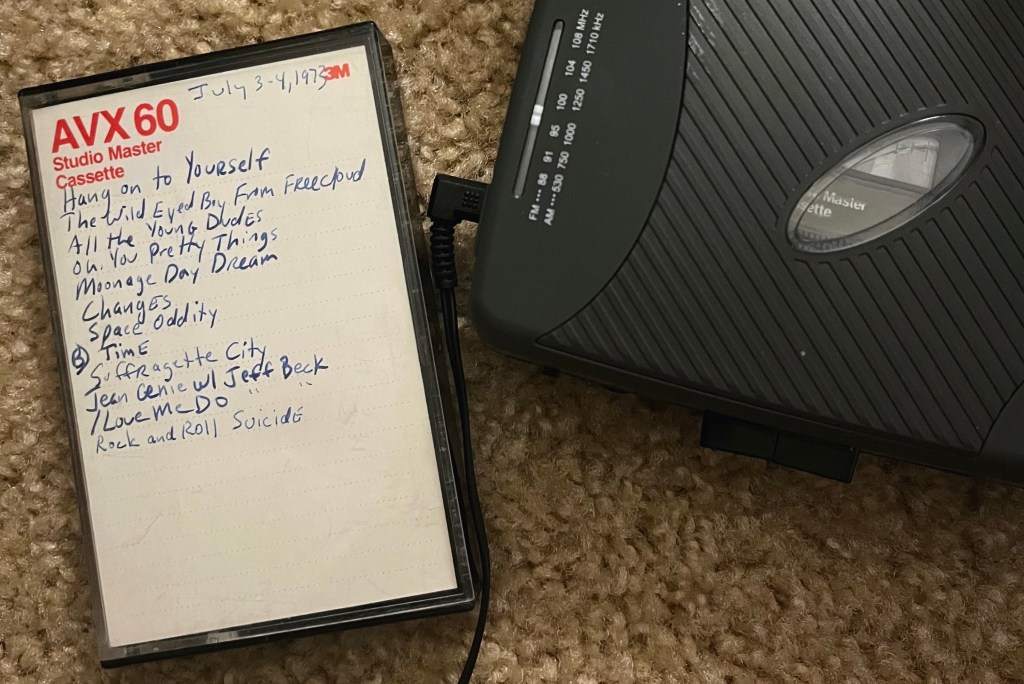
David Bowie, Earl’s Court, July 3-4, 1973
Then Lou Reed:
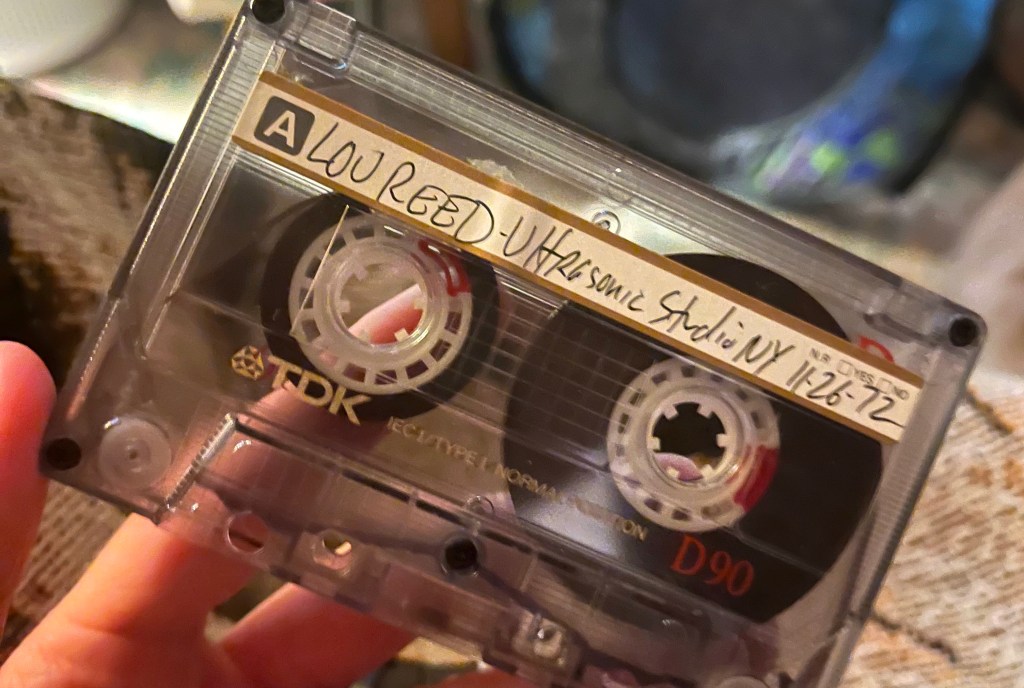
Lou Reed, Ultrasonic Studio, December 26, 1972
Then The Clash:
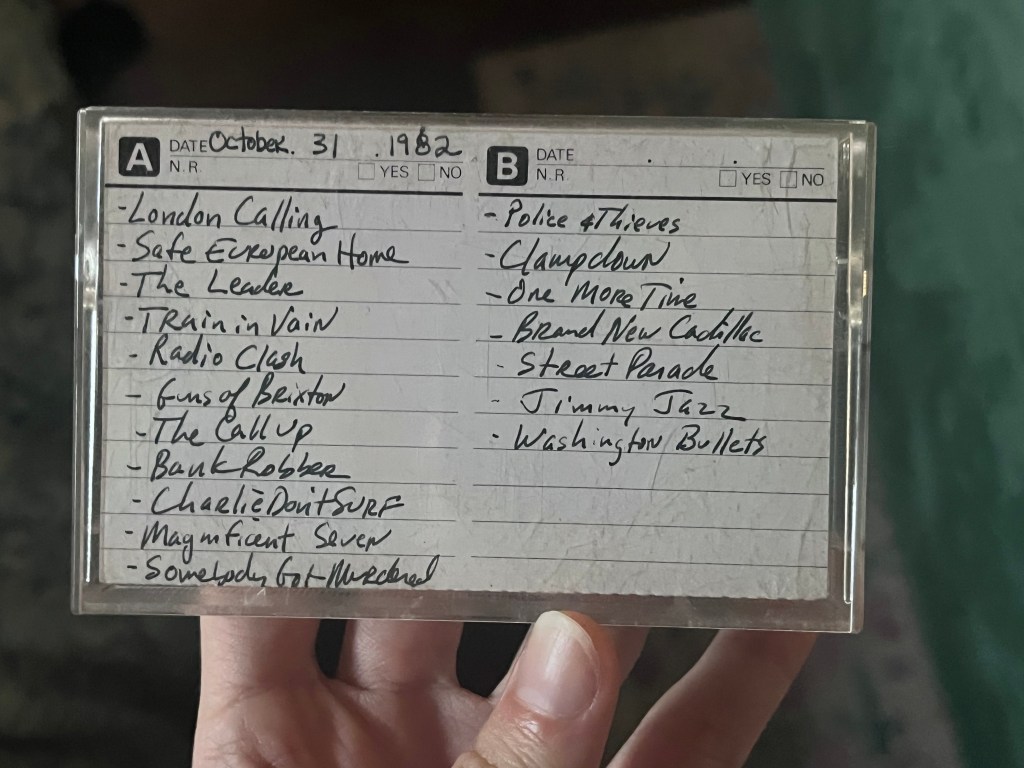
The Clash, San Francisco, October 31, 1982
The more I listened, the more intent I became: I had to preserve these performances. I had to make sure these shuddering, raw, noisy, light-filled shows would live forever.
As it always happens, life pulled me away from this project for a bit, but for the last few months, I’ve been cycling through Larry’s collection, sorting and organizing and preparing to digitize the full set, tape by tape, hopefully learning how to restore the rougher recordings to their former glory. I can’t wait to share snippets of this spectacular collection with you all.
Over and over, people have asked me if I understand the value of these cassettes, with some urging me to sell them. Of course, I do understand the value—these tapes are priceless. I made a promise to Larry that I intend to keep. Instead, I will work to honor his generosity by digitizing and sharing these precious and unquantifiable recordings, ensuring they’re accessible to all those who share in the love of these fizzing, popping, cheap, captivating pieces of plastic and the magic they’ve been capturing for decades.
And Larry, if you’re reading this, thank you. I’ve kept my word. I’ll catch you on the flip side.


Leave a comment